
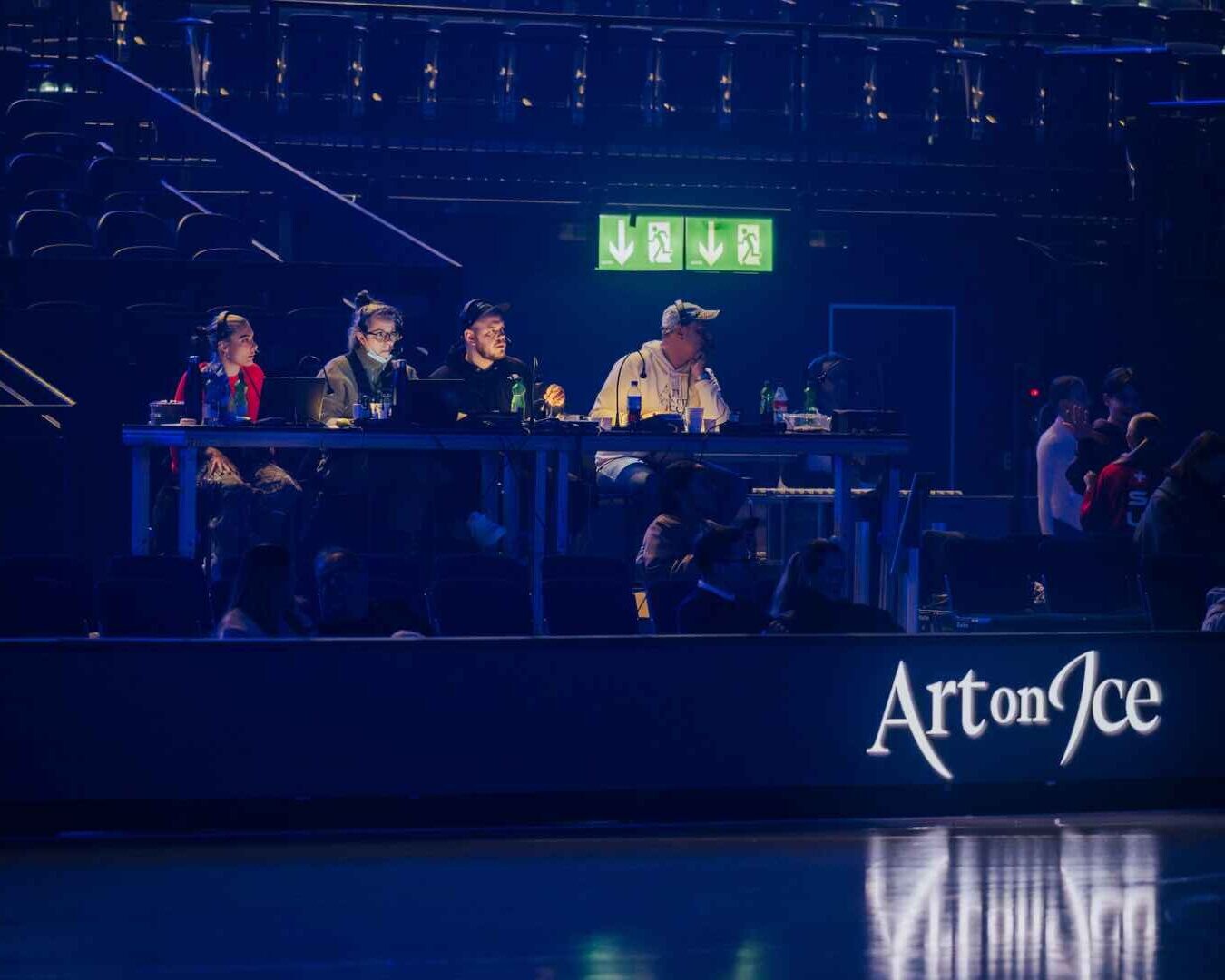
Production Team
In this joint interview, they talk about the journey from initial ideas to a finished show, how working with figure skaters differs from working with stage dancers and their most memorable moments from Art on Ice 2026.
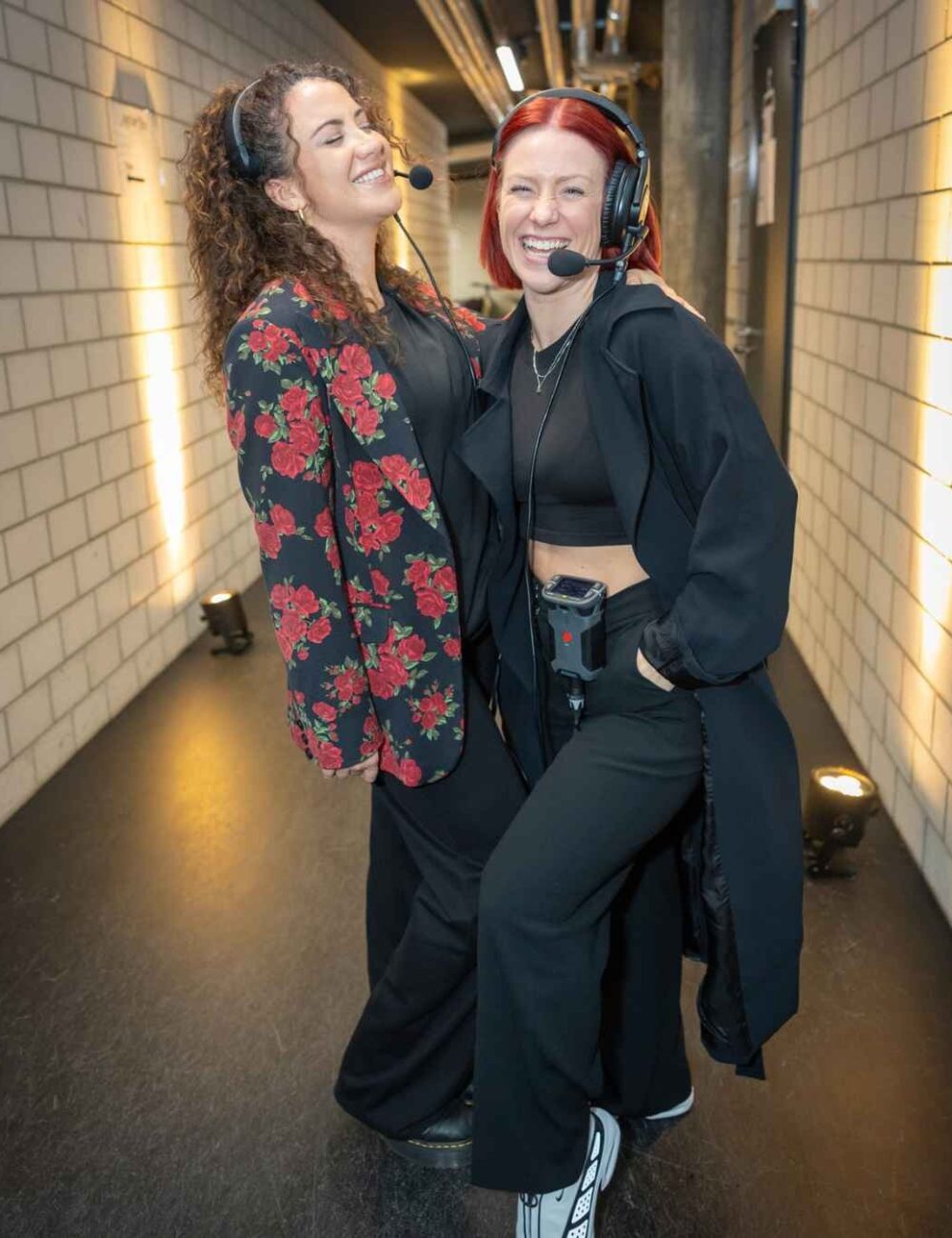
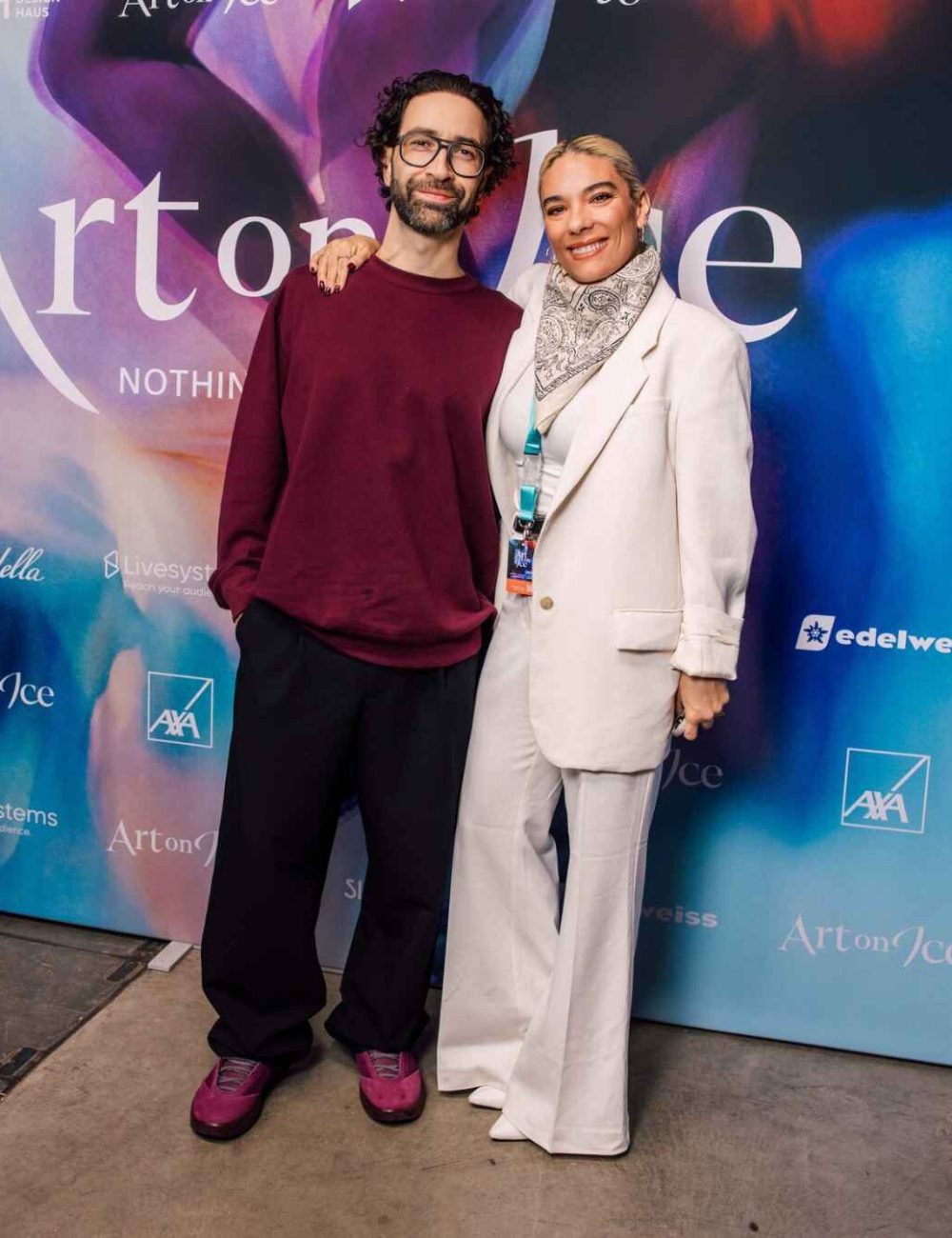
Caroline: I’m the Creative Director and Lead Choreographer at Art on Ice and have been part of the team since 2018. As a member of the Creative Team, I’m involved in developing the overall concept and choreographic language for the show. This also includes bringing to life the individual numbers, together with Sofia and the rest of the team.
Sofia: I’m Sofia Lucrezia Sforza and I’m originally from Bergamo in Italy. My background is in ice dancing. I joined Art on Ice as a figure skater in 2016 and am now celebrating my 10th anniversary with the team. My current role is Skating Director and Choreographer, and I’m jointly responsible for casting. I no longer go out onto the ice myself, but work behind the scenes on developing the concept for the show, working on figure skating numbers and putting together the cast.


Caroline: Before we start with the actual choreography, we have numerous discussions and creative meetings.
Sofia: Creative meetings start by asking what kind of story this year’s show should tell. What is the central theme? What emotional journey would we like to create? And what should the audience take away with them after the show?
Caroline: These questions allow us to develop the concept and the overarching story for the show. Occasionally, some initial choreographic references take shape as early as this initial phase.
Sofia: During an intensive creative week in Zurich, we as a team develop the structure of the show step by step. We decide where the big group numbers should fit in, what solo numbers should be included, who should appear during which song and how to manage transitions.
Caroline: Drawing on the ideas we came up with together, I then develop specific concepts for the individual numbers and discuss these with the team. Some routines initially take shape with the artists and stage dancers and are then adapted for the ice afterwards. With other numbers, we devise these specifically for the figure skaters from the outset. I also sometimes approach Sofia with an idea, and she brings it to life on the ice. We work on this in Toronto and Zurich, but sometimes remotely too.
Choreograpgy: Creative meeting
Sofia: In most cases, the choreographic material takes shape away from the ice at first and in close collaboration with Caroline. We work in the studio, put ideas down on paper or perform movements through a given space to try out new approaches. I get inspiration from everywhere: nature, films, theatre, dance and museums.
Sofia: Exactly. We only transfer the material onto the ice after reaching this point. A lot of things need to be reconsidered at this stage. A movement that works on the floor will not automatically translate into a movement performed by someone wearing skates. On the ice, speed, formations, steps and the edges of the skates play a decisive role.
The first time that figure skating, dance, acrobatics, lighting, costumes and live music finally come together to full effect is during the production week at the Hallenstadion, so just before the tour is due to start. Until then, the various elements have only been rehearsed individually. This week is an intensive and challenging time, but there is also that unique feeling you get when an idea suddenly turns into a real show.
Sofia: The creative process begins much earlier than the creative meetings in autumn. Following the final show on a tour, we give ourselves a few weeks’ rest. After this, the first thoughts about the next edition begin to emerge already. We gather ideas and work on casting.
Caroline: For me, the actual work in the studio begins each November, around three months before the premiere.
Sofia: As a matter of fact, we’re never totally finished. The actual choreography work happens later, but the creative thought process starts almost a year in advance.
Caroline: Our rehearsal schedule is really tight. So those involved either attend rehearsals directly or are sent videos in advance, with detailed instructions, to allow them to prepare on their own.
Sofia: The stage dancers start their rehearsals in Canada, as Caroline and many of our dance ensemble live in Toronto. I also travel to Toronto during the preparation period in order to work with them on the material. With ice dancers, the organisational side of things is more complex. The scope for ice sessions is limited, and they are expensive. Also, cast members come from various countries and each of them follows their own training plan. So a lot of the preparation takes place remotely. People are sent the material and study the choreography at home. The most important rehearsal phase for the figure skating routines takes place in Zurich from as early as January. Apart from the rehearsals on ice, the ice dancers also work in the studio. Later on, the dance ensemble travels over from Toronto, and we merge all the elements together. With the star figure skaters, we adopt yet another approach. They are sent briefings and choreography instructions in advance. Once they come to Zurich, we take things further with them in person. We also develop individual solo appearances remotely or at the respective training locations directly.
Sofia: Figure skating and dance are two different worlds that complement each other wonderfully. Dancers have an exceptional grasp of detail. The positioning of hands, a movement of the head or a very slight shift in weight can be used to express something. They’re capable of completely owning even small spaces.
Caroline: They’re used to learning choreography as part of a group and are really familiar with this kind of rehearsal process. In some cases, figure skaters only acquire this type of experience in the course of their show careers. In particular, competitive athletes or those from specific disciplines are not always familiar with this way of working.
Sofia: I would have to agree. Many figure skaters are not used, at first, to moving as part of a large group. Dancers often grow up in ensembles and learn, early on, how to work in synchronicity and respond to one another. Whereas most figure skaters train alone or in pairs. Suddenly having to work with 15 people, like one body, is a new experience for them. What they bring to the party are speed and big lines. They use the entire surface of the ice and are able to move through the space in a way you don’t find in any other discipline. A beautifully skated edge has a magic of its own.
Caroline: At Art on Ice, they learn both choreography on ice and the kinds of movements you associate with dance. At the same time, they make up the ensemble around the star figure skaters, acrobats and musical acts.
Sofia: This is why Caroline and I work hard on combining both disciplines into a common language. In the end, the audience does not make a distinction between dance and figure skating, but experiences a show where everything feels connected.
Caroline: We have a fabulous group, who are really open to getting involved in the creative process and work tremendously hard.
Choreography: Rehearsals with the stage dancers in Toronto
Caroline: Openness is particularly important for us. With Art on Ice, we like to push boundaries and try out things that might appear unexpected or unusual at first. Anyone who enjoys experimenting and is ready to test their own limits is most likely to fit the bill for us.
Sofia: I would also include generosity. During competitions, you’re skating to impress a jury. With Art on Ice, you’re appearing before thousands of people. The audience can sense immediately whether someone is really giving something of themselves or just going through the motions.
Adaptability is just as important. A live show is never exactly the same as a rehearsal. For example, the band might play a passage a bit differently, the lighting might change or something unexpected might happen. Good performers respond to these things and make it look as if everything is going exactly to plan.
Discipline and team spirit matter too. The programme of shows is intensive, and the quality level has to be as high for the final show as for the premiere. Also, Art on Ice is not just a collection of individual performances, but a show where everything feels connected. Everyone has to be prepared to become part of something bigger.
Sofia: We bring together worlds that don’t normally encounter each other in this form: figure skating, dance, acrobatics, live music, light design and production. Each area has its own language and timing and is associated with different requirements. All those involved are outstanding in their discipline. The challenge is to see a shared concept emerge from these elements, rather than just a sequence of individual highlights.
Caroline: Another challenge is how little time is available. Artists from all over the world come together for the show. So we have to work really efficiently and remain creative at the same time.
Sofia: Exactly. Because we rehearse the show in individual parts for months in advance, with each group doing its own thing. It’s only a few days before the premiere that all involved find themselves in the same building, on the actual ice and with the finished stage set behind them. In this short space of time, everything has to come together to create a cohesive whole. This is where we can rely on an exceptionally dedicated and professional team.
Choreography: Rehearsals on the ice
Caroline: A premiere is an incredibly fulfilling experience. There is a degree of nervousness as well, of course. At the same time, we know that we bring an exceptional show to the stage and the ice year after year, a show the whole team can be proud of. It’s a special moment for me, to sit back and look at the ideas that have made it through the entire development process. I then get to experience how these go down with the audience and how it responds to them.
Sofia: I’m nervous right up to the last moments. I’m a perfectionist and pay attention to every detail. During the premiere, I continue to take notes and record what we might still adapt or improve. At the same time, I let the show do its work on me and am ready to be surprised by it. And then you have the audience there. For months, you visualise how people might react. Suddenly, this reaction is actually taking place and is often louder and more heartfelt than you imagined. At this very moment, a whole year’s work crystallises into a single sound. I’ve experienced this for ten years, and it still touches me every time. There really is nothing like a live show.
Sofia: Art on Ice 2026 was something special for several reasons. We celebrated the show’s 30th anniversary, as well as my own 10th anniversary at Art on Ice. My newborn nephew was there too, which made this edition even more personal for me. The opening number has touched me greatly each time. The story it tells and the moment the entire cast appear together on the stage and the ice have a special magic. The final show in Davos is also always very emotional for me. There’s a very special feeling in the air for all involved. It’s a bitter-sweet moment, and I invariably end up crying. At the same time, I feel incredibly proud and grateful.
Caroline: My highlight was also the story about how Art on Ice came to be. It was told in a very theatrical and engaging way. I was proud of how we managed to combine a powerful story, covering 30 years, with the big sense of spectacle you associate with the show. It meant a great deal to me to hear how the audience reacted to it and how deeply the story touched many people.
Sofia: To the people watching from their seats, Art on Ice is made to look easy, and they may take things for granted. This is exactly what we set out to achieve. But making things look apparently easy is one of the hardest tricks to pull off. All the figure skaters, dancers, acrobats and musicians work tremendously hard. Behind them is a team who are busy throughout the year: production, the technical crew, the lighting and music team, the costume department and many other people besides. Without them, there would be nothing on the ice for the audience to experience.
So I would like to thank all the artists, workers and the entire production team. Each and every one of them puts a great deal of work, and their heart and soul, into this show. I’m also really grateful for the confidence shown in me and the opportunity to develop further as part of the Art on Ice family.
Caroline: I can only agree. And we’re already really looking forward to developing Art on Ice 2027. We hope the audience will be there again to experience the new show with us.
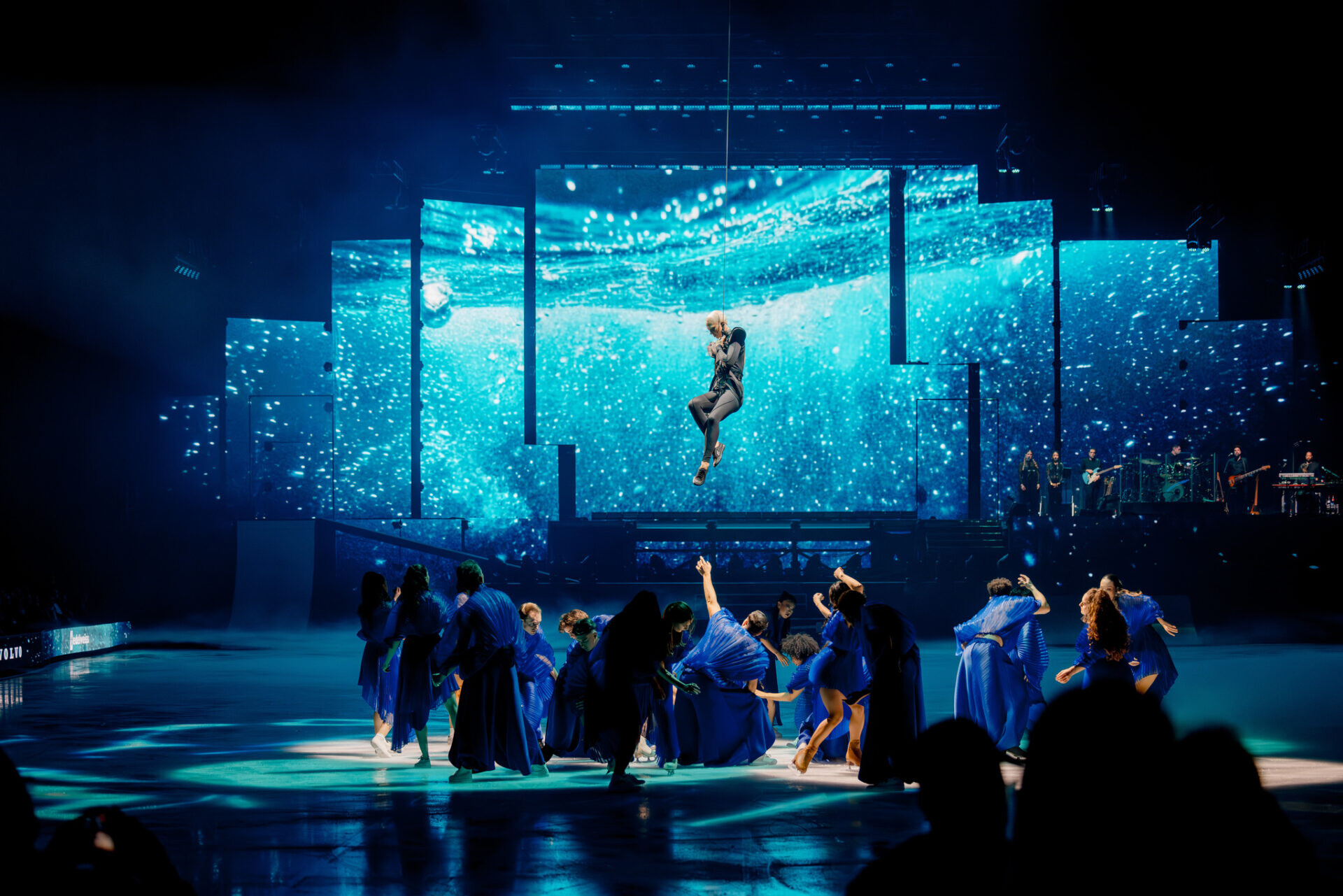
Art on Ice kehrt auch nächstes Jahr zurück nach Zürich, Fribourg und Davos. Vom 4. bis 13. Februar 2027 sorgen wir erneut für eines der spektakulärsten Live-Erlebnisse der Schweiz und sogen für Gänsehaut. Freue dich auf eine Show voller Emotionen, atemberaubender Momente und einzigartiger Live-Magie.

Margrith Scherrer is Marketing Manager and makes sure the world knows when it’s time for Art on Ice! She is an outdoor sports enthusiast in the summer and thanks to Art on Ice she has the perfect excuse not to go skiing in the winter.
